Many homeowners believe that once they have an RCC (Reinforced Cement Concrete) slab, their leakage worries are over. However, this is a major misconception. Leakage issues are not caused by the RCC itself, but by how and when the casting was performed.
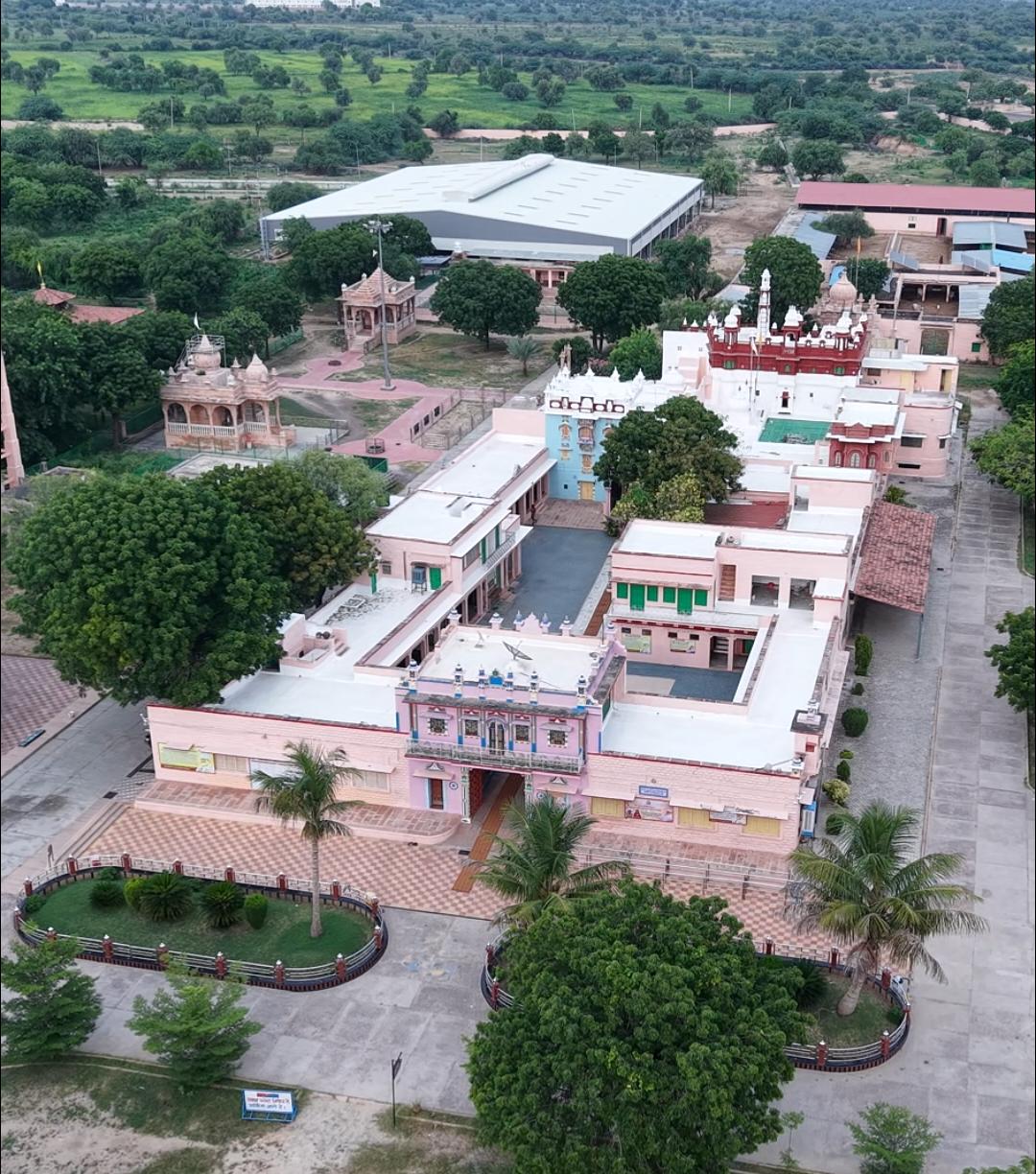
In this case study, Shriyansh Buildcom highlights a restoration project for a 10-year-old resort where a high-quality RCC roof was failing due to technical oversight.
The Problem: Why “Solid” RCC Roofs Still Leak
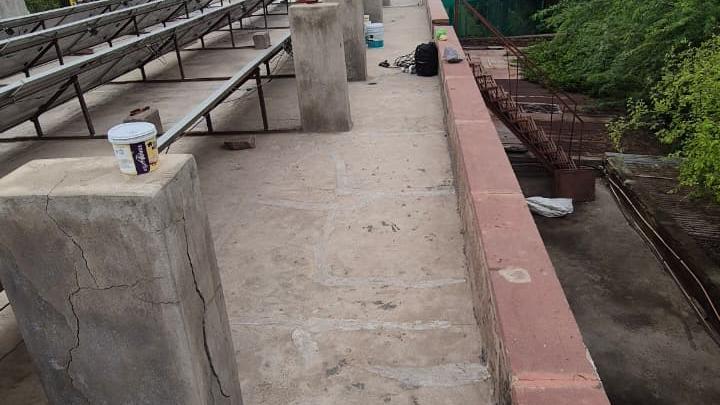
During our inspection of the resort, we identified three critical reasons why their 10-year-old RCC roof was failing:
-
Honeycombing: During the original casting, improper Vibrating left small air pockets and hollow spaces (honeycombs) in the concrete. These act as hidden channels for water to seep through.
-
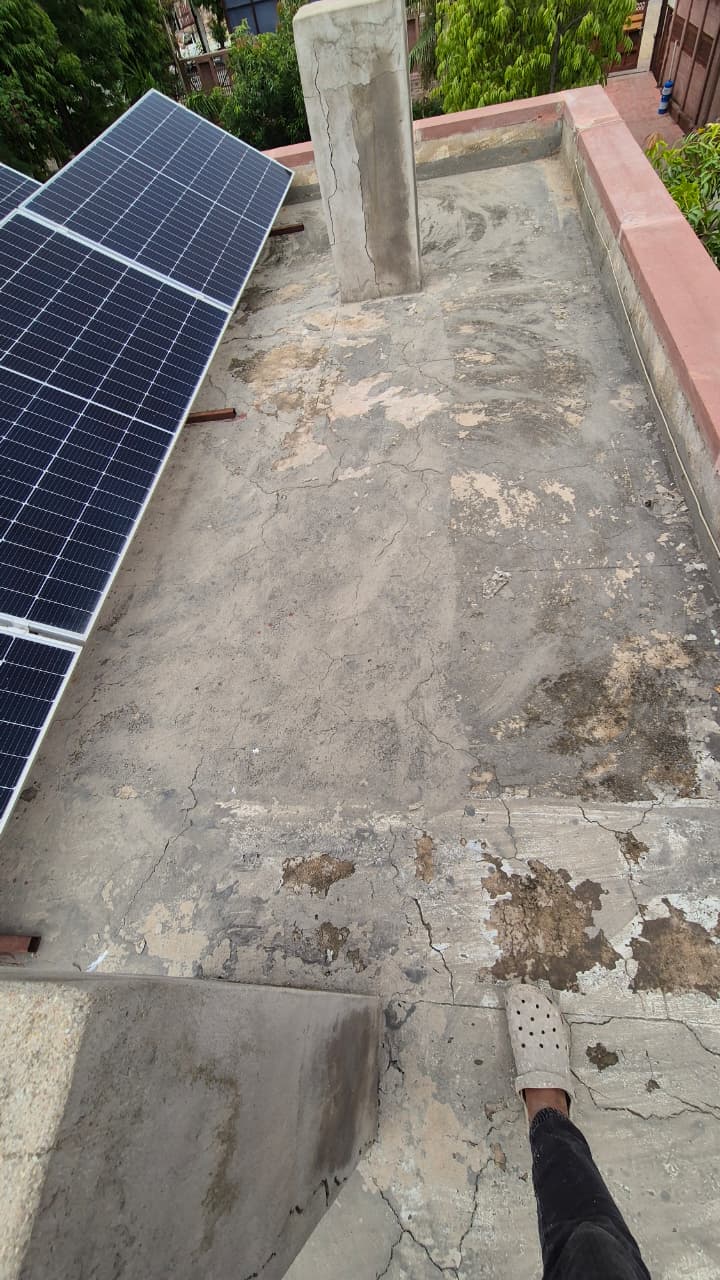
Thermal Cracks: The roof was likely cast in high temperatures. Without enough time for the cement to set properly, Hairline Cracks developed across the surface.
-
Lack of PCC & Slope: The biggest mistake was the absence of PCC (Plain Cement Concrete) on top of the RCC. Without a proper Slope, water would stagnate on the roof. This standing water eventually reached the steel reinforcements, causing Carbonation (rusting) and structural leakage.
The Shriyansh Buildcom Technical Solution
To provide a permanent fix, our team moved beyond simple coatings and focused on structural rectification:
1. Precision Surface Preparation
We started with thorough Grinding of the entire terrace. This removes laitance (weak surface layers) and opens up the pores of the concrete to ensure the new materials bond perfectly.
2. Slope Correction with Micro-Concrete
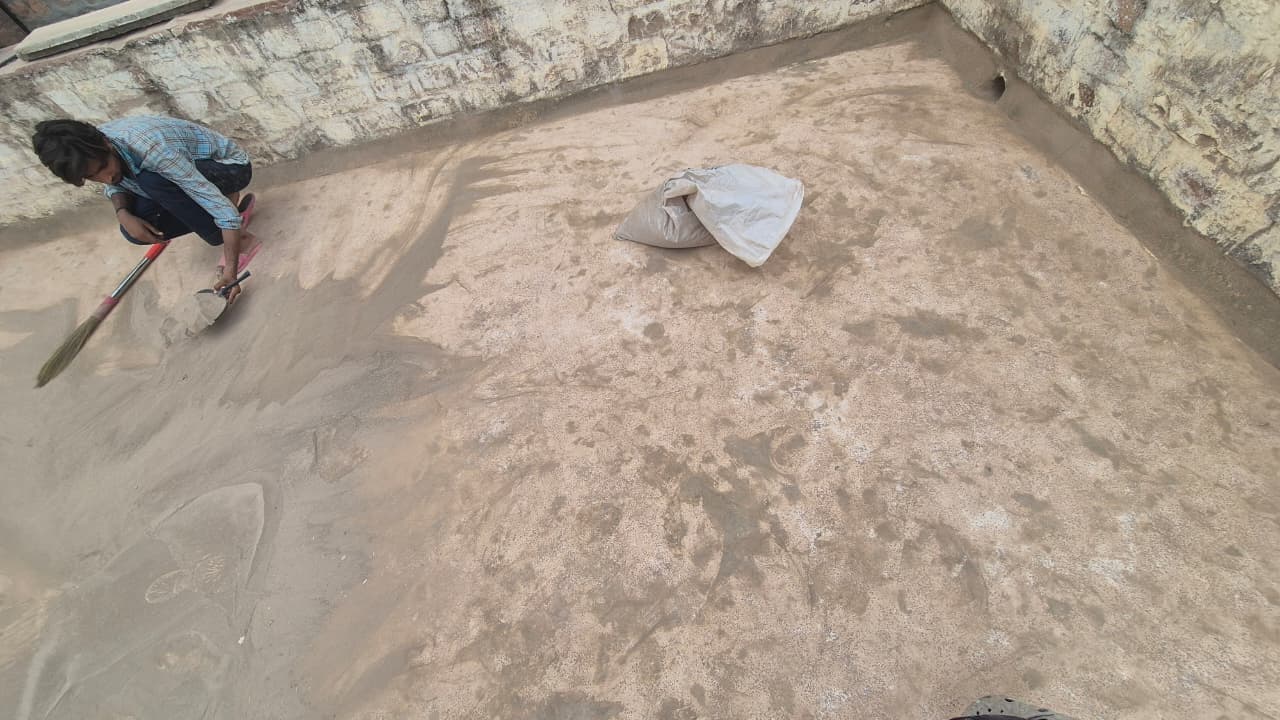
Instead of using traditional heavy cement bags, we used Micro-Concrete to create a perfect slope toward the drainage points.
-
Why Micro-Concrete? It is Non-Shrinking, meaning it won’t crack as it dries. It offers superior strength and doesn’t require traditional Curing (watering), making the process faster and more reliable.
3. Critical Drainage Grouting
Most leaks start at the drain pipe. We performed Core Cutting around the drainage pipes and sealed them using GP2 (Multipurpose Grout). This high-strength grout ensures the most vulnerable points of the roof are 100% watertight.
4. PU Elastomeric Coating with Geotextile Mesh
For the final protective layer, we applied a high-build PU (Polyurethane) Elastomeric Coating.
-
The Reinforcement: We embedded Geotextile Fiber Mesh between the layers. While standard coatings might last 10–12 years, adding this mesh increases the Elongation and structural strength, extending the life of the treatment to 15–20 years.
-
Dual Feature: This system provides both Waterproofing and Heat Proofing, reflecting sunlight and keeping the resort rooms cooler.
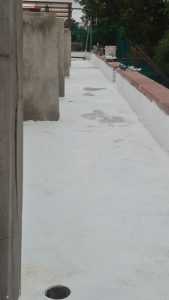
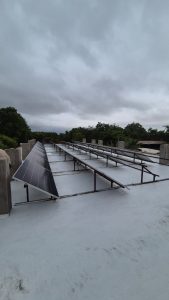
The Result: 12-Year Warranty and Peace of Mind
By following a technical approach rather than a “quick fix,” we provided the client with a 12-year official warranty. Despite the heavy monsoon and the harsh Rajasthan sun over the last year, the resort remains completely leak-free with 100% performance accuracy.
Expert Insight: A Message to Homeowners
Even if your contractor tells you that “new RCC doesn’t need waterproofing,” remember that the cost of waterproofing during construction is a fraction of the cost of repairing a damaged structure later. Protecting your roof early increases the life of your building and prevents the nightmare of peeling paint and rusted steel.
Always choose a Certified Professional who uses high-performance products and understands the technicalities of structural repair.
Don’t wait for the first drop of rain to fall. Contact Shriyansh Buildcom for a professional site inspection today.