Construction techniques in the past often relied on a combination of metal bars and stone slabs (locally known as Patthar ki Patti). While these structures have stood the test of time, they face a unique modern challenge: thermal expansion.
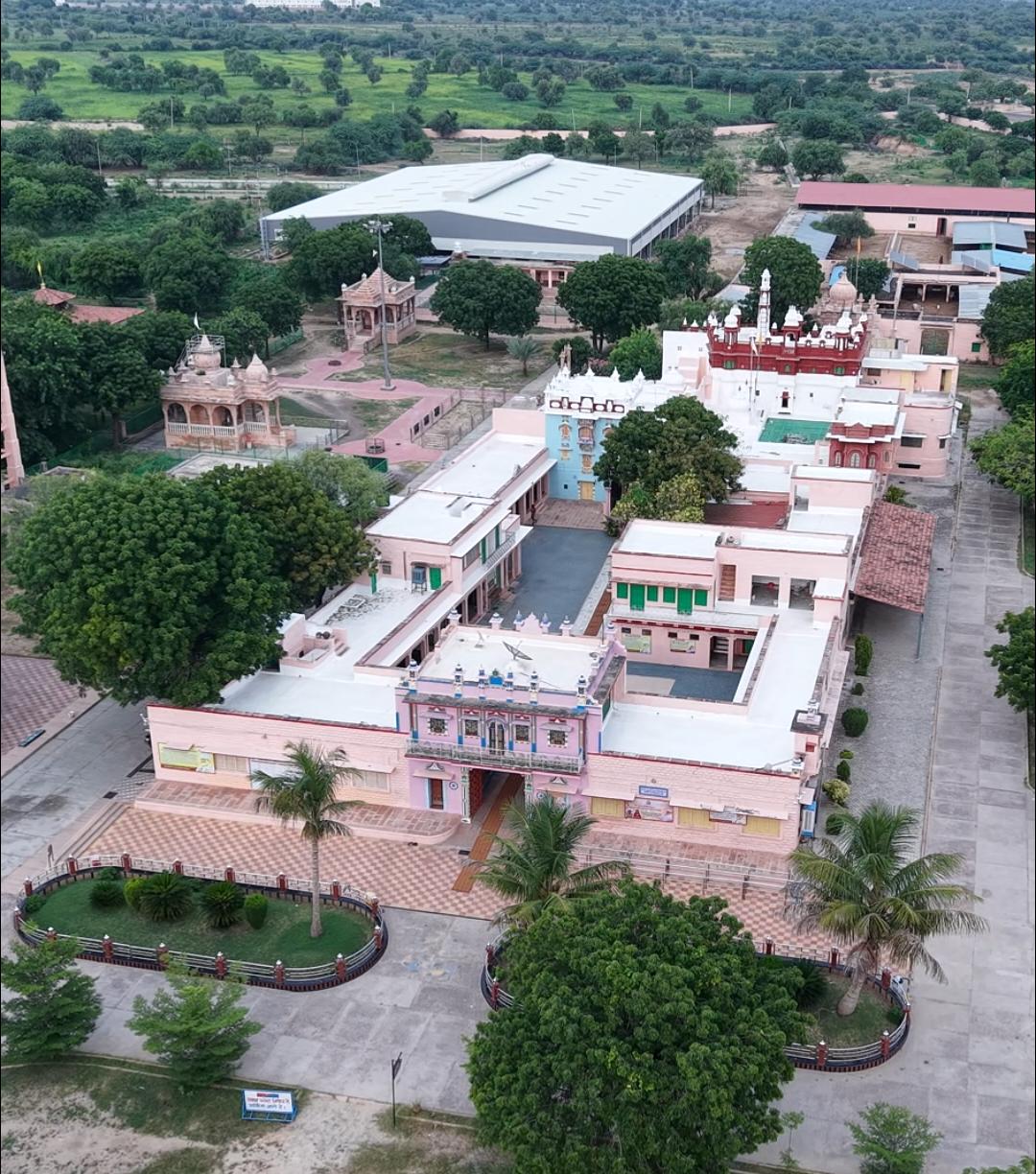
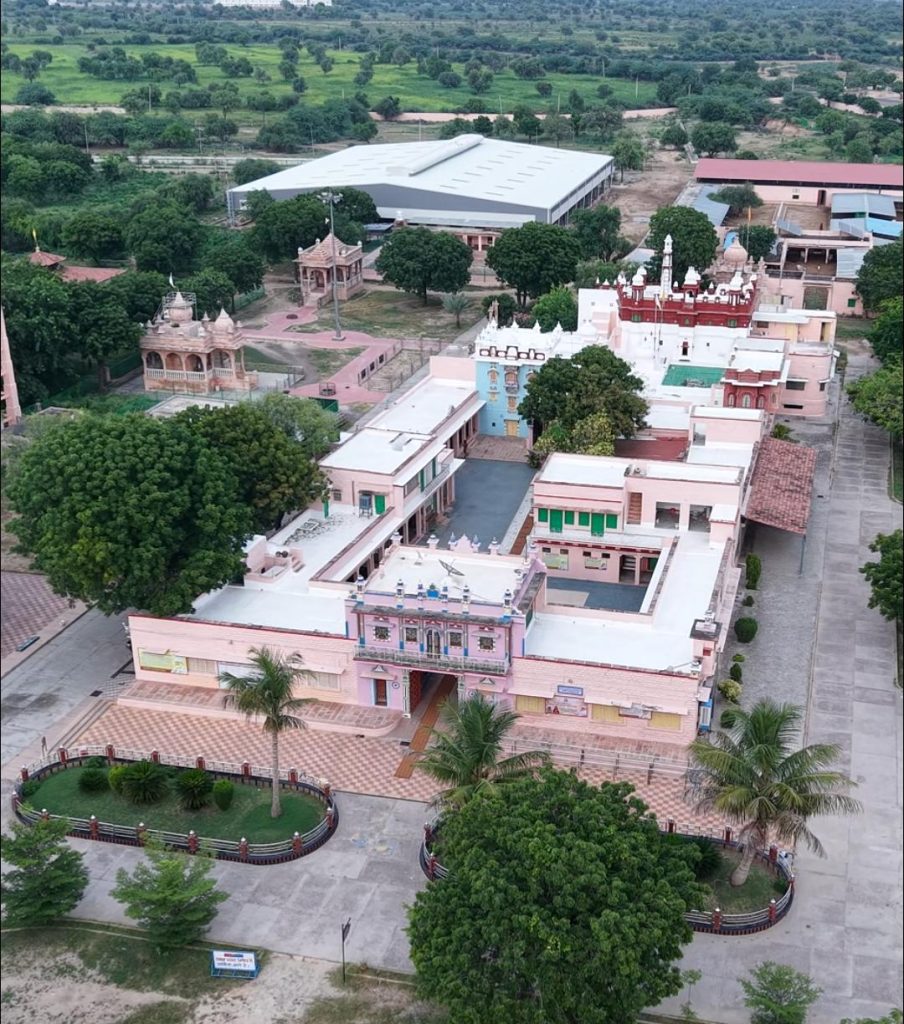
In this case study, we explore how we tackled a complex leakage issue at the historic Shri Rajaram Ashram in Luni, Rajasthan—a 50-year-old building where traditional repair methods had previously failed.
The Problem: The Science of Thermal Expansion
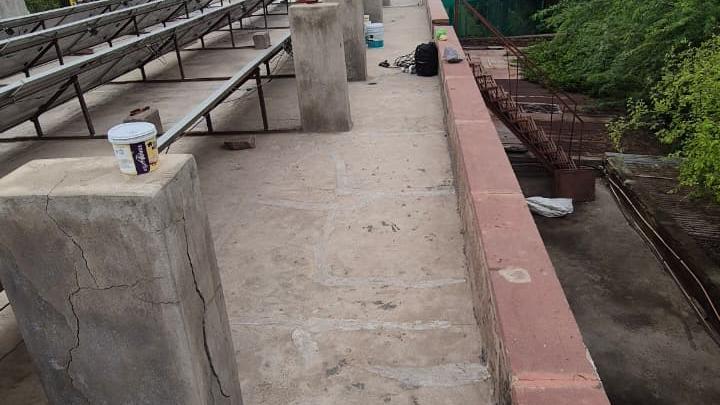
The main issue with stone slab roofs supported by iron girders or metal bars is the difference in how materials react to heat. During Rajasthan’s intense summers, the metal bars expand; in winter, they contract. This constant movement creates significant structural stress, leading to:
-
- Deep structural cracks along the joints.
-
- Heavy seepage during the monsoon.
-
- Moss and Algae growth, which further degrades the surface.
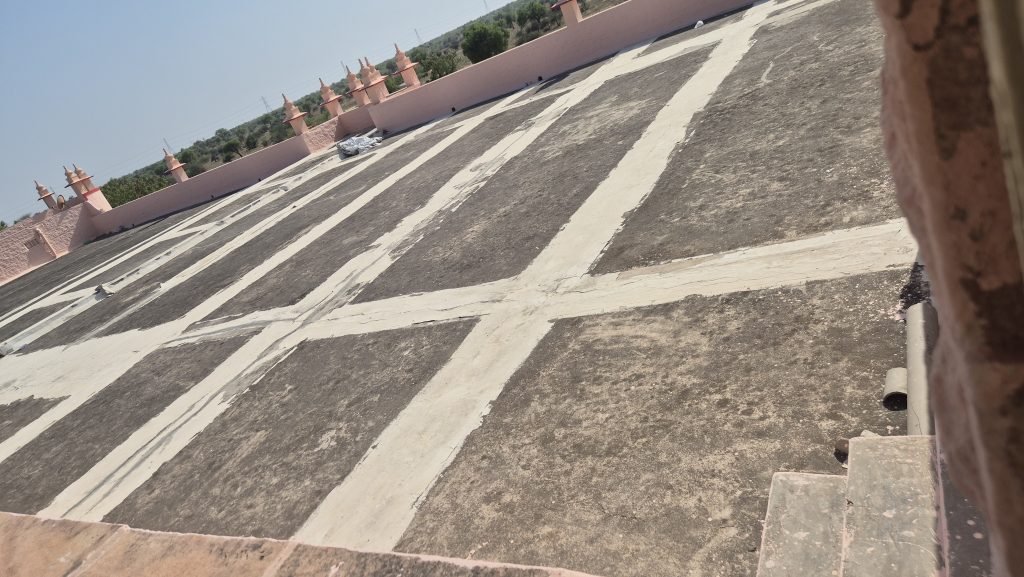
When we arrived at Shri Rajaram Ashram, two previous contractors had already attempted repairs using basic SBR and elastomeric coatings. However, because they failed to treat the V-groove joints properly, the cracks reopened almost immediately.
The Shriyansh Buildcom 7-Step Restoration Process
1. Surface Preparation & Algae Removal
The first step was a deep cleaning of the entire terrace. We performed extensive scraping to remove the thick layer of black moss and algae that had accumulated over the years, ensuring the treatment would bond directly to the substrate.
2. V-Groove Excavation
Rather than simply painting over the cracks, we excavated 6-inch V-grooves along the metal bar joints. This is a critical step that allows the sealant to sit deep within the structure rather than just on the surface.
3. SBR Priming
We applied a specialized SBR (Styrene-Butadiene Rubber) priming coat. This acts as a bonding agent between the old traditional lime/stone surface and our modern repair materials.
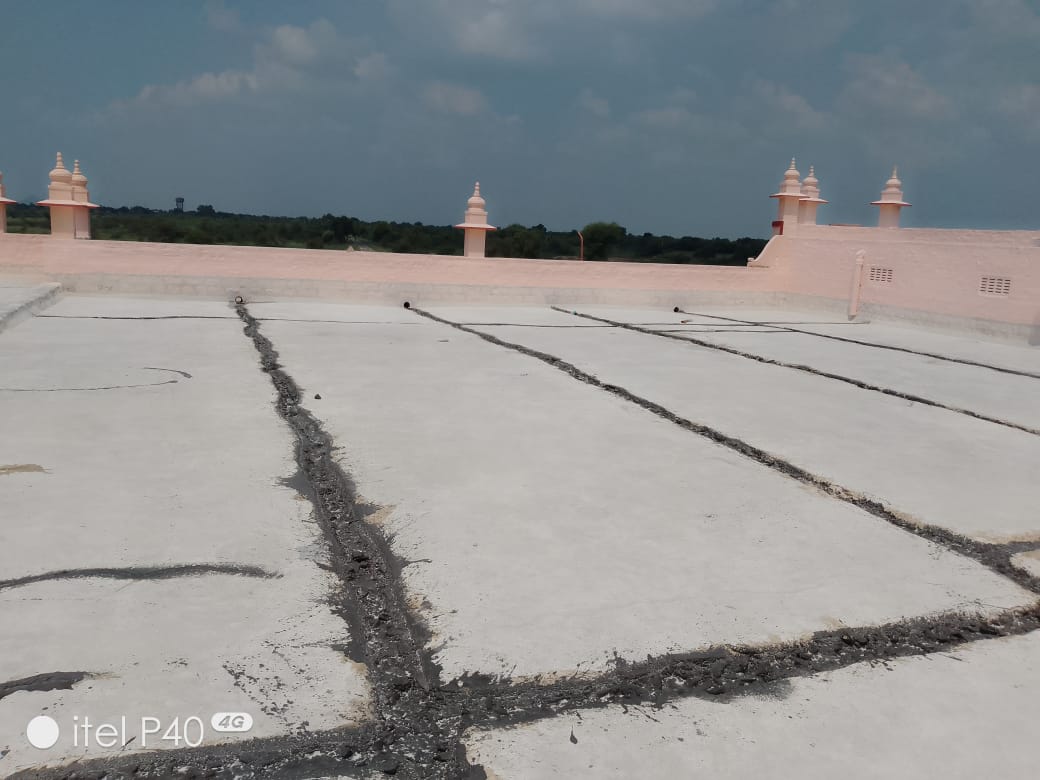
4. PU Hybrid Sealant & Micro-Concrete Filling
The deep grooves were filled with a PU (Polyurethane) Hybrid Sealant for flexibility, followed by micro-concrete. This combination ensures the joint can “breathe” during thermal expansion without cracking.
5. Surface Priming for Bonding
The entire roof surface received a full SBR coating to prepare it for the final waterproof membrane, ensuring 100% adhesion.
6. Geotextile Fiber Mesh & PU Elastomeric Coating
We applied a high-performance PU Elastomeric coating reinforced with Geotextile fiber mesh. We applied three layers to create a seamless, “rubberized” membrane that moves with the building.
7. Reflective Heat Proofing
The final topcoat was finished in a high-reflectivity white. This provides a dual benefit: 100% waterproofing and heat proofing, significantly reducing the indoor temperature of the Ashram during the summer.
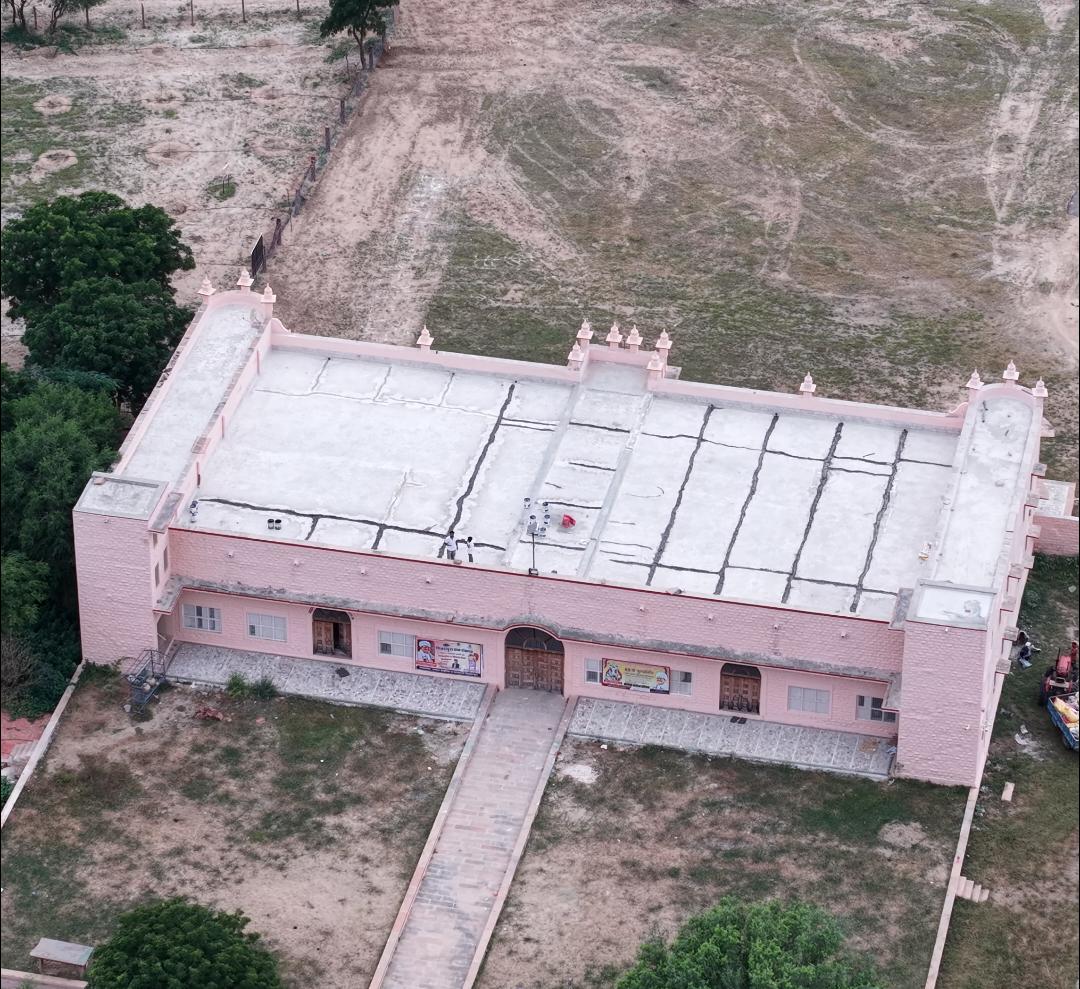
The Results: 100% Accuracy and Performance
It has been over a year since the completion of the Shri Rajaram Ashram project. Despite a year of record-breaking heat and heavy rainfall in Rajasthan, our recent site visit confirmed:
-
- Zero Leakage: The interior remains completely dry.
-
- No Seepage: The structural cracks have remained sealed.
-
- Total Success: The 50-year-old heritage structure is now protected for years to come.
Expert Advice: Don’t Fall for “Quick Fix” Solutions
You may often see social media reels promoting “magic glues” or transparent sprays that claim to stop leaks instantly. These are temporary bandages, not permanent solutions.
For a lasting result, always consult a professional waterproofing technician. A technical site visit and a warranty-backed process are the only ways to ensure your property remains safe and dry.
Contact Shriyansh Buildcom today for a professional site inspection.